Twill Describes a Fabric Structure, Not a Promise About Its Fibre
A product description can sound technical while leaving the material comparison incomplete. Twill is one example: it describes a fabric structure rather than naming the fibre by itself. Read the structure, composition and garment shape together before treating two twill jackets as interchangeable alternatives at different price points.
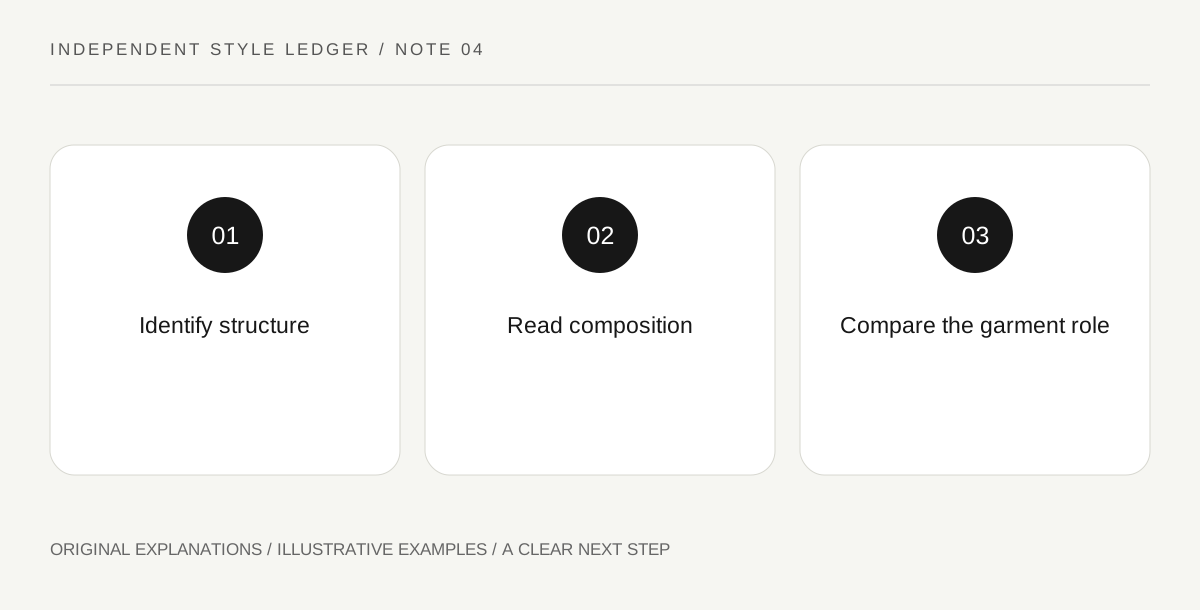
Original explanatory diagram. Read the full method and limitations below.
Separate the diagonal from the composition
CottonWorks describes right-hand twill by the direction of its twill line. That construction information is distinct from the fibre content in a garment’s composition statement. Record each on a separate line. Do not infer that every twill is the same cotton fabric or that a visible diagonal proves a particular origin. A photograph may help you understand appearance, but it cannot complete missing material documentation.
Keep weight and finish as their own questions
If the maker provides fabric weight or finishing information, record the exact terms and units without inventing a thickness from the picture. Similar-looking diagonals can appear on garments intended for different uses. Ask how the designer describes the fabric’s role in the garment, while recognizing that marketing descriptions are not a personal wear test. Avoid declaring one jacket seasonless or weatherproof merely because its weave name sounds robust.
Observe how the cut uses the fabric
Study the collar, hem, sleeve and body shape in the available views. Is the garment presented as a firm outline or a softer drape? Keep that as an observation about the image until the actual item can be assessed. A lower-priced alternative may echo the outline while using a different weight or finish. Describe the shared design feature and the unresolved material differences instead of collapsing them into a single equivalence claim.
Make the comparison useful for ownership
Read the exact care label information and any repair or alteration advice relevant to the finished jacket. Consider whether your intended use requires details such as an internal pocket or a particular fastening arrangement. Those concrete functions can matter more than matching the weave word. If the listing leaves a central requirement unanswered, pause that item’s comparison and ask about it before treating a price difference as a saving.
Illustrative worked example
Illustrative example: Alex compares two fictional jackets described as twill. One lists its fibre blend and fabric weight; the other only names the weave. Alex likes a broad collar common to both but cannot yet compare the materials. The second seller is asked for composition and care details. Alex’s note says similar collar idea, material comparison incomplete, which is more accurate than calling the less expensive piece the same jacket without the brand.
Questions that come up
Can I identify a twill’s fibre from its diagonal?
No. The visible structure does not establish the complete fibre content. Use the composition statement and appropriate product information, keeping any image-based observation limited to what is actually visible.
Is twill automatically a quality upgrade?
It is a construction term, not a universal quality grade. Evaluate how the specific fabric, garment construction, fit and care requirements serve your intended use rather than ranking every product by the presence of the word.
References and scope
These sources support the factual background. Examples and exercises are original illustrative teaching material. References do not imply endorsement.
- CottonWorks: right-hand twill — Twill-line direction is a construction property, not fibre content or a quality score.
- FTC: apparel and labeling — U.S. textile labeling information separates fibre content, origin and responsible business; not a worldwide legal guide.