Silk and Satin Answer Different Questions on a Clothing Page
An inexpensive satin shirt and a silk shirt may share a luminous photograph while making different material claims. Before calling one an affordable equivalent, separate the fibre description from the fabric construction. You can prefer either garment, but the comparison becomes clearer when the words describe the same kinds of properties.
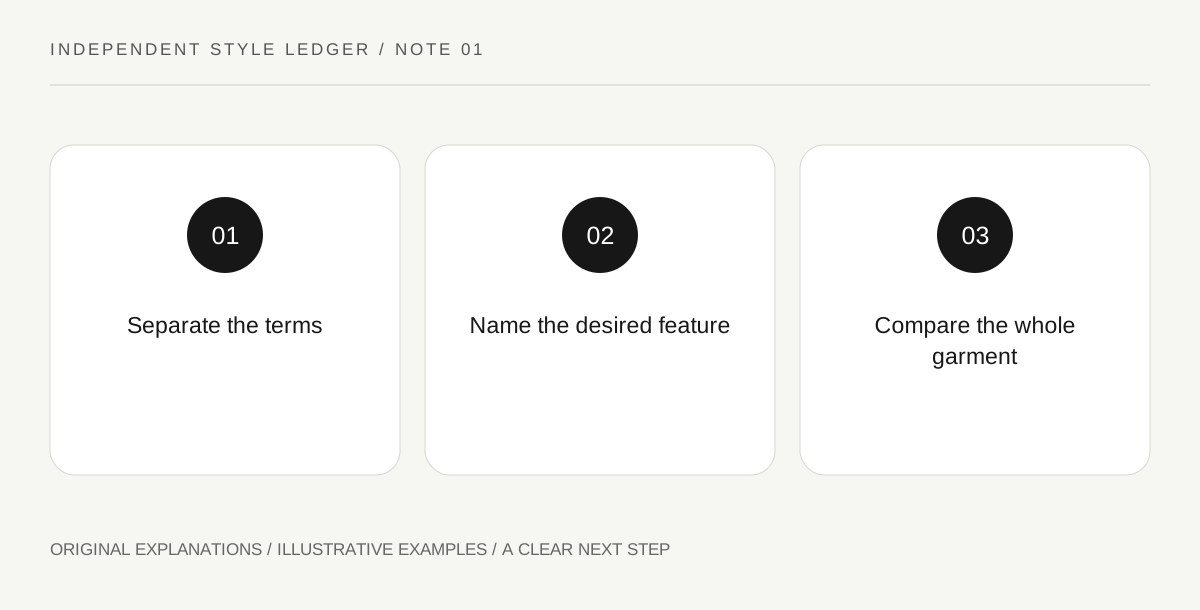
Original explanatory diagram. Read the full method and limitations below.
Put fibre and construction in separate boxes
Silk names a fibre, while satin belongs to fabric-construction terminology. CottonWorks discusses satin in its textile encyclopedia. A shopping description may use both words together, or use a surface description without clearly naming the fibre. Copy the actual composition into one box and the fabric description into another. Do not fill a missing composition with an assumption based on shine, price or the apparent smoothness of a photograph.
Decide which property attracted you
Write whether you want a lustrous surface, a particular fibre, a fluid-looking silhouette or a combination. These preferences can lead to different shortlists. If the visual effect matters most, a lower-priced garment may deserve consideration without being described as the same material. If fibre identity is central, keep that requirement explicit. The word alternative is more useful when it states what is being substituted and what is allowed to differ.
Compare details at the garment level
Look at opacity information, lining, fastenings and the intended shape alongside composition. A close crop of shiny fabric cannot show all of those features. Ask for a specific missing detail rather than whether the item feels expensive. When possible, inspect a permitted sample or try the garment under the seller’s conditions. Do not perform improvised burn, water or abrasion tests on merchandise to identify a fibre.
Read the care instruction before deciding
The finished garment’s care guidance matters even when you recognize the fibre name. Compare that guidance with the routine you can realistically maintain. A material preference does not override trims, dyes or construction that the maker has accounted for. Record any unanswered care question before purchase. The best alternative for your situation may be the one with a manageable documented routine rather than the closest-looking photograph.
Illustrative worked example
Illustrative example: Iris likes the soft shine of a designer blouse but sets a lower spending limit. One alternative clearly lists a different fibre with a satin description; another lists silk but uses a different surface and cut. Iris separates appearance, composition and shape, then decides which feature is essential. Neither garment is called identical, and no claim is made about how either would feel or last without examination.
Questions that come up
Does satin automatically mean silk?
No. Do not infer fibre content from the surface term alone. Read the composition and ask the seller if it is missing or contradictory. The two descriptions belong in different parts of your comparison.
Can a different fibre still be a useful alternative?
Yes, if it delivers the feature you value and you accept the stated differences. Describe it as an alternative for shine, outline or another defined purpose rather than claiming it is the same material for less money.
References and scope
These sources support the factual background. Examples and exercises are original illustrative teaching material. References do not imply endorsement.
- CottonWorks: satin — Satin is textile construction terminology; actual fibre content requires its own description.
- FTC: care labeling — Care instructions concern the finished covered garment; alternative methods should not be inferred from fibre alone.