Oversized Is a Design Description, Not an Instruction to Guess Two Sizes Down
An oversized garment may deliberately allocate space in particular areas while retaining a specific shoulder, neckline or sleeve design. Treat that description as a question about intended shape rather than a universal size conversion. Compare the actual chart and available views before changing size solely to remove the advertised volume.
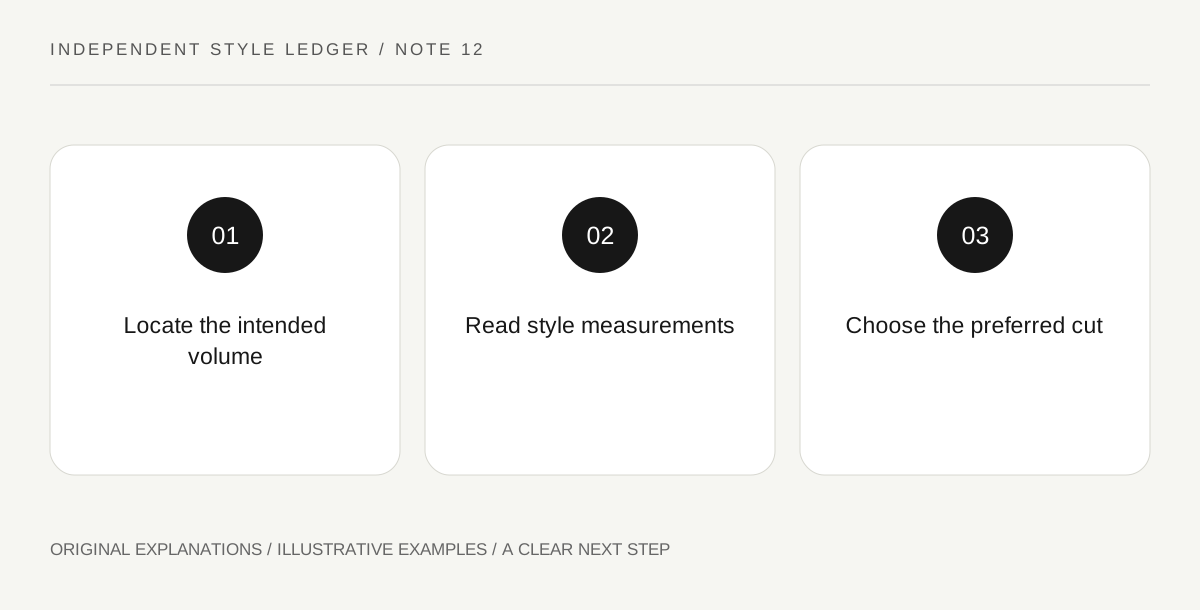
Original explanatory diagram. Read the full method and limitations below.
Identify where the design adds space
Look at the body, sleeve, shoulder and length separately. A wide body with a short hem creates a different arrangement from a long garment with dropped shoulders. Write those observations without assuming the images show every size identically. The word oversized does not specify a fixed number of centimetres, and it does not establish how the maker grades the design between sizes.
Read the correct size information
First identify whether the maker’s chart describes body or garment measurements; the Seasalt guide provides one explicit body-chart example. Read any style-specific fit note alongside the chart instead of replacing it. A general chart and a product-specific note may answer different questions. If the relationship is unclear, ask the studio how the advertised fit is intended to be selected for that particular style.
Separate preferred volume from required movement
You can prefer less visual volume without assuming that a smaller size preserves every other proportion. During a permitted fitting, assess ordinary movement, fastenings and the neckline rather than holding a single photographic pose. Do not force a tight area to obtain a narrower silhouette. If the design’s intended shape does not suit your preference, a different cut may answer the question better than a large size change.
Compare alternatives by shape distribution
For a lower-priced alternative, record which part of the silhouette you want to retain: a broad upper sleeve, a short square body or a long uninterrupted front. Another garment may supply that feature in a different size system. Compare its own documented dimensions and fit guidance, without translating labels across brands as if they were universal. Keep shape preference distinct from judgments about anyone’s body or an imagined correct size.
Illustrative worked example
Illustrative example: Robin likes a fictional boxy jacket’s short body but wants a narrower sleeve. Going down two sizes would also shorten the body and change the shoulder arrangement. The studio’s measurements help Robin see that those changes are linked. Robin chooses to examine a different cut with a similar short hem instead of forcing the first design into an unpromised shape. No universal sizing advice or body target is implied.
Questions that come up
Should I always size down in an oversized design?
No. Read the maker’s guidance and actual measurements. A smaller size may alter several proportions, and whether those changes suit you depends on the specific garment and your preferences.
Can two oversized pieces fit very differently?
Yes. The label does not define one universal pattern. Compare the distribution of width and length, measurement conventions and intended use instead of assuming the same size word describes the same shape everywhere.
References and scope
These sources support the factual background. Examples and exercises are original illustrative teaching material. References do not imply endorsement.
- Seasalt: size guide — The referenced guide explicitly uses body measurements, illustrating why chart type matters; no product-size recommendation.