Body Measurements and Flat Garment Measurements Need Different Comparisons
An independent studio’s size chart may describe the wearer, the finished garment or both. Comparing the wrong kind of measurement can make a carefully chosen size seem inexplicable. Identify the chart’s convention before doing arithmetic, then compare like measurements with the measuring method and unit left visible.
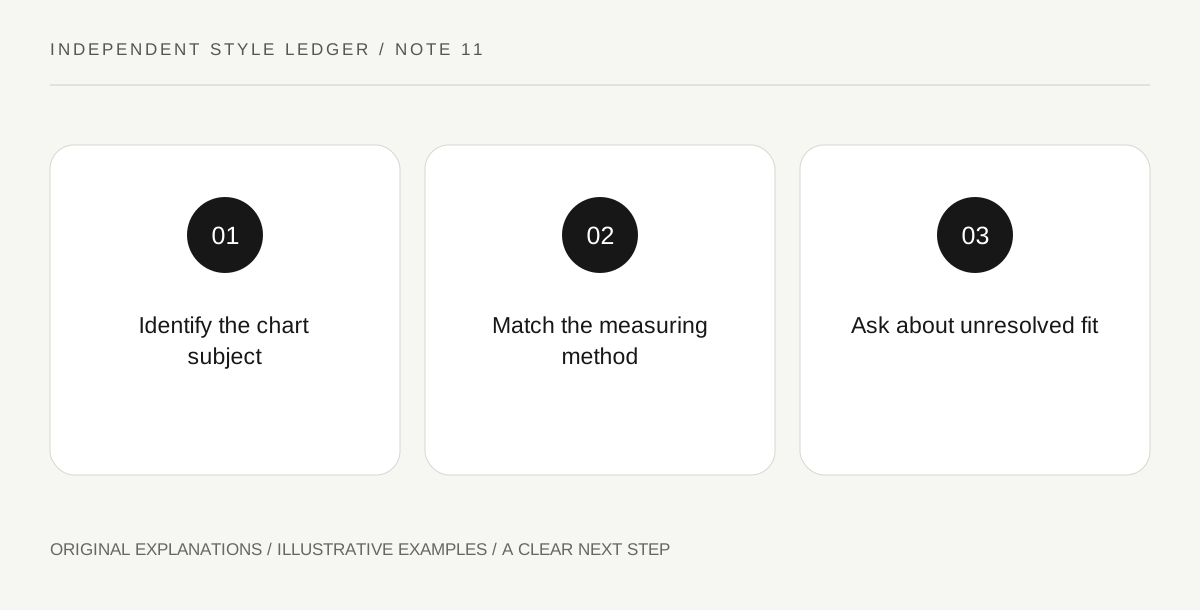
Original explanatory diagram. Read the full method and limitations below.
Read the chart’s subject first
Seasalt’s referenced size guide explicitly describes body measurements, illustrating why a chart heading matters. Another maker may publish finished-garment dimensions instead. Neither format should be silently substituted for the other. Find the words that identify what is being measured and keep them beside the numbers. If the chart is unlabeled, ask the studio which convention it uses before selecting a size from it.
Keep width distinct from circumference
A flat width across a garment is not a complete circumference unless the stated measuring method makes that conversion appropriate. Follow the maker’s diagram rather than doubling every number automatically. Note where the tape begins and ends, whether the item is fastened and whether stretch is applied. A shoulder width, sleeve length and chest circumference describe different paths and cannot be compared simply because they share centimetres.
Choose a relevant comparison garment
Where the studio suggests comparison with something you own, choose a garment with a similar role and construction and follow the specified method. Measure it without pulling or reshaping it. Record the identity and condition of that reference piece. An old knit that has changed shape may still tell you what feels comfortable, but it is not an untouched specification for every new garment or material.
Use uncertainty to form a fit question
If the chart leaves a crucial area unresolved, ask about that area in plain language: the measurement method for an upper sleeve, for example. Do not send unnecessary personal information or assume a small studio can diagnose fit from one number. Keep the return or fitting options visible while deciding. A chart can reduce uncertainty without guaranteeing that the finished garment will feel right in every movement.
Illustrative worked example
Illustrative example: Pat compares an existing overshirt measuring 58 centimetres flat across a stated chest line with a chart headed body chest circumference. Pat notices that the subjects differ and stops before treating the numbers as competing sizes. The studio provides a separate finished-garment measurement and its diagram. Pat can now compare the same measurement type, while recognizing that fabric and cut still differ. These invented numbers do not prescribe a size.
Questions that come up
Can I double every flat measurement?
No. The conversion depends on what was measured and how. Use the maker’s diagram and explanation rather than applying one arithmetic shortcut to chest widths, shoulders, sleeves and asymmetric shapes alike.
Does matching one dimension guarantee fit?
No. A garment involves several dimensions, construction choices and movements. Use the chart to ask better questions and make an informed choice, while preserving appropriate fitting and return options where available.
References and scope
These sources support the factual background. Examples and exercises are original illustrative teaching material. References do not imply endorsement.
- Seasalt: size guide — The referenced guide explicitly uses body measurements, illustrating why chart type matters; no product-size recommendation.