Describe an Affordable Alternative by the Feature It Preserves
The phrase same look for less can hide several unrelated wishes: a shape, a material, a colour or a recognizable logo. Write a precise feature brief before searching for an accessible alternative. It gives an independent design room to be its own object while making your budget comparison more honest.
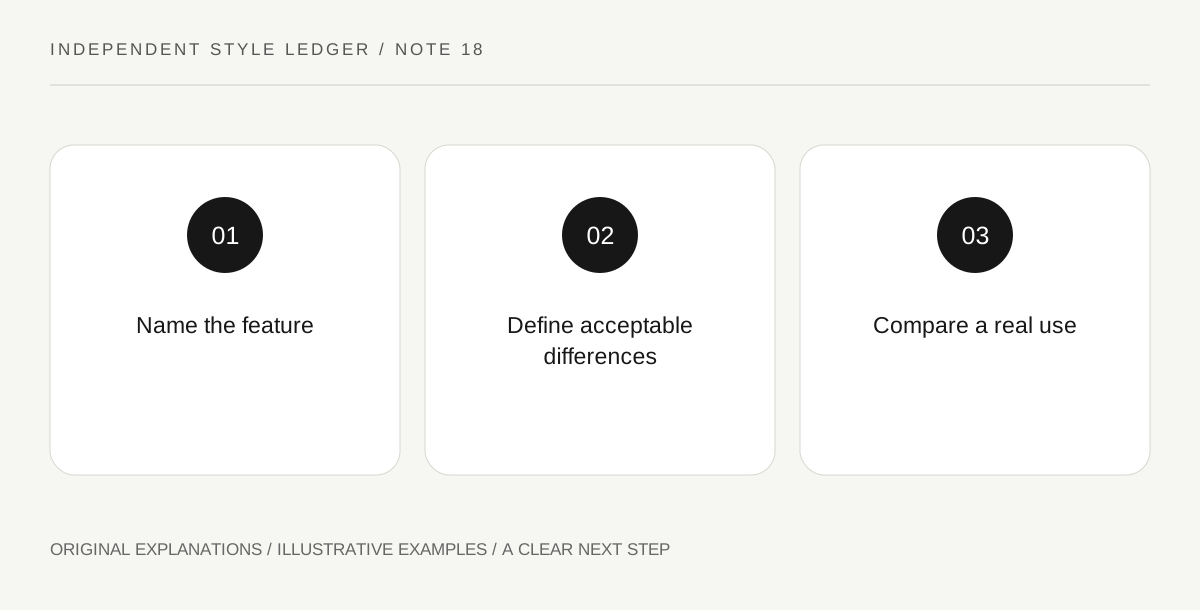
Original explanatory diagram. Read the full method and limitations below.
Choose a feature rather than a brand identity
Describe a broad collar, curved seam arrangement, compact shape or another visible design characteristic in ordinary words. Keep trademarks and authenticity claims out of the brief. A legitimate alternative can share a general design preference while having its own identity. You do not need to describe it as an identical product or imply an association with a designer whose work it is not.
Separate essentials from acceptable differences
Make three short columns: essential feature, acceptable difference and unresolved question. Perhaps the short square outline is essential, while a different fastening or fibre is acceptable. Read actual composition rather than relying on descriptive mood words; FTC apparel information illustrates the distinction between fibre, origin and responsible-business information. A lower price is meaningful only after the product satisfies the requirement you intended to preserve.
Compare one ordinary use case
Choose an occasion or routine in which the garment would be worn and identify relevant movement, carrying and care needs. Avoid hypothetical expert uses added merely to justify a higher budget. If an alternative needs an extra layer, separate accessory or alteration to work for that situation, include that in the comparison. Use real quotes when necessary instead of inventing a hidden-cost estimate that makes your preferred option win.
Let a different design remain different
Write a final comparison sentence that states both the shared feature and the material or construction difference. Do not use an untested quality claim such as indistinguishable to erase uncertainty. You may decide the alternative is suitable, the original remains worth saving for, or neither serves your routine. A clear brief can also reveal that an existing garment already answers the desire without a new purchase.
Illustrative worked example
Illustrative example: An invented designer jacket attracts Mara because of its short body and generous collar, not its label. Mara finds an independent alternative with those two features but a different fabric and no lining. The comparison sentence preserves both facts. After checking fit and care, Mara can assess the alternative on its own terms rather than treating the fabric difference as something the lower price must conceal.
Questions that come up
Can I call a similar-looking item identical?
Only make equivalence claims you can support. Shared outline or colour does not establish matching fibre, construction or performance. A more precise sentence identifies the actual shared feature and the differences you accept.
What if the original is still the only design I want?
Keep the budget boundary and avoid buying several unsatisfying substitutes. You can save, wait or decline the purchase. A comparison is useful even when its result is that no current alternative meets your specific preference.
References and scope
These sources support the factual background. Examples and exercises are original illustrative teaching material. References do not imply endorsement.
- FTC: apparel and labeling — U.S. textile labeling information separates fibre content, origin and responsible business; not a worldwide legal guide.
- FTC: online shopping — Checking total cost and specific order details; article avoids jurisdiction-specific deadlines or individualized legal advice.